Premier Insulation Toronto: Spray Foam Insulation in Toronto, ON
Spray foam goes where one layer has to seal and insulate at once: rim joists, sloped ceilings and knee walls.
- Serving Toronto & 15 neighbourhoods
- Open 24 hours
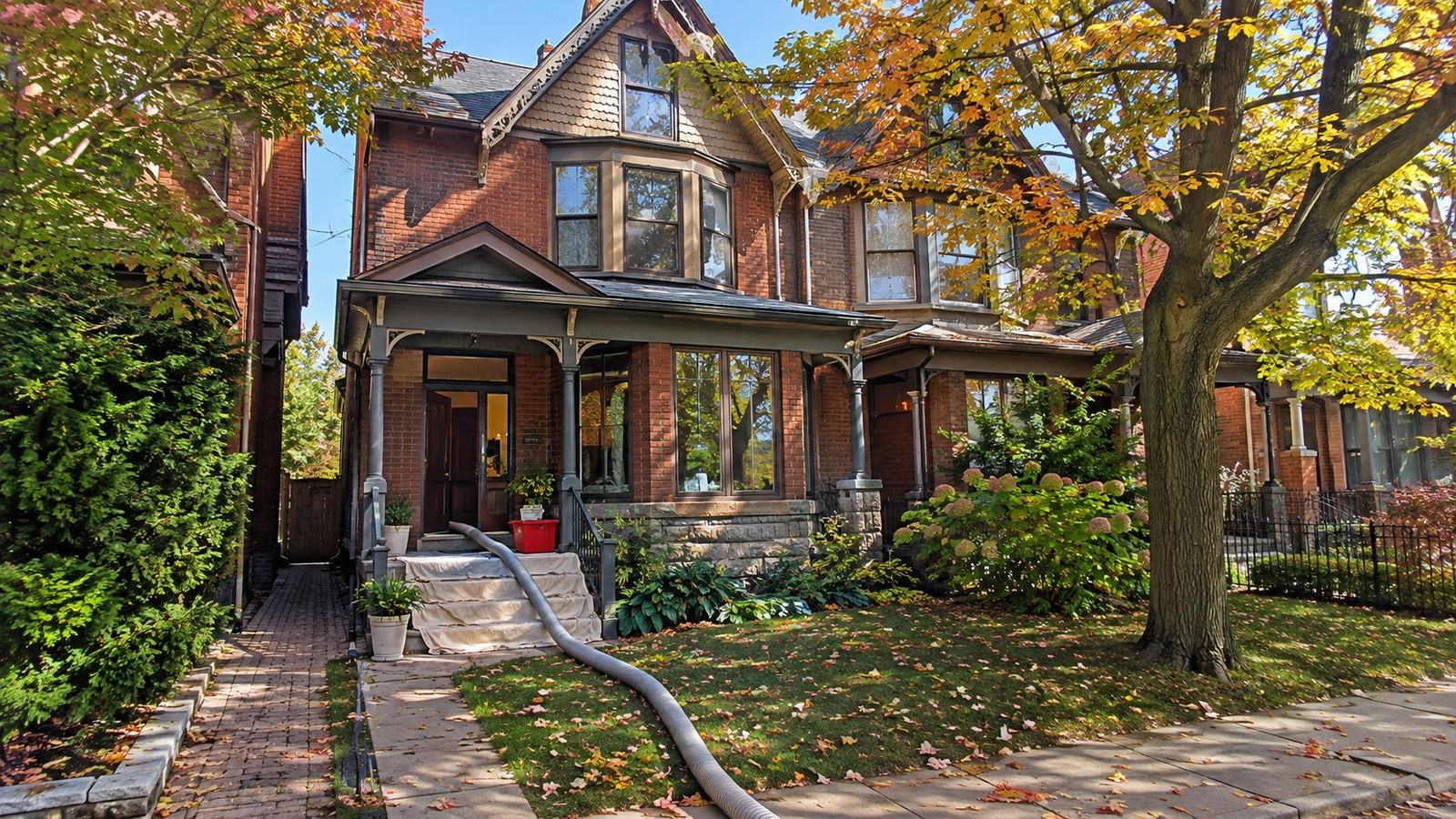
Premier Insulation Toronto installs spray foam insulation in Toronto, mostly in century homes in the west end, and we check how the house is built before we quote. Where loose-fill or dense-pack will do the job, we use those instead. We also do attic insulation, old insulation removal and basement insulation.
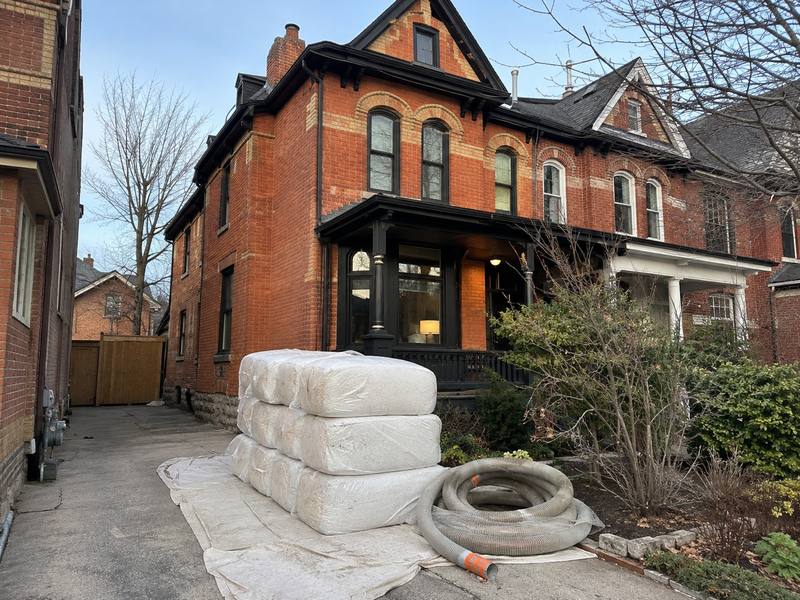
About Us
Insulation for old west end Toronto houses
Premier Insulation Toronto spends most of its time inside west end century homes, in Bloordale, Dufferin Grove, Little Portugal, Roncesvalles and the Junction Triangle. Most are Victorian and Edwardian semis with double-brick walls, balloon framing, knee walls and attics you can barely crawl into.
We dense-pack walls through small holes and patch them afterwards. We build up attic insulation, air seal around chimneys and plumbing stacks, and spray foam on rim joists and sloped ceilings. We also pull out old insulation that decades and raccoons have ruined. No two old houses have been insulated the same way.
- We look before we quote. We check the attic, walls and basement first. Depth, damp spots, ventilation and air leaks decide which material is right.
- We seal before we insulate. We close the gaps around chimneys, plumbing stacks, top plates and the attic hatch first. Insulation laid over open leaks can't do its job.
- We say what the house needs. If a top-up is enough, we tell you. If old insulation has to come out, we show you why.
In detail
The work, room by room
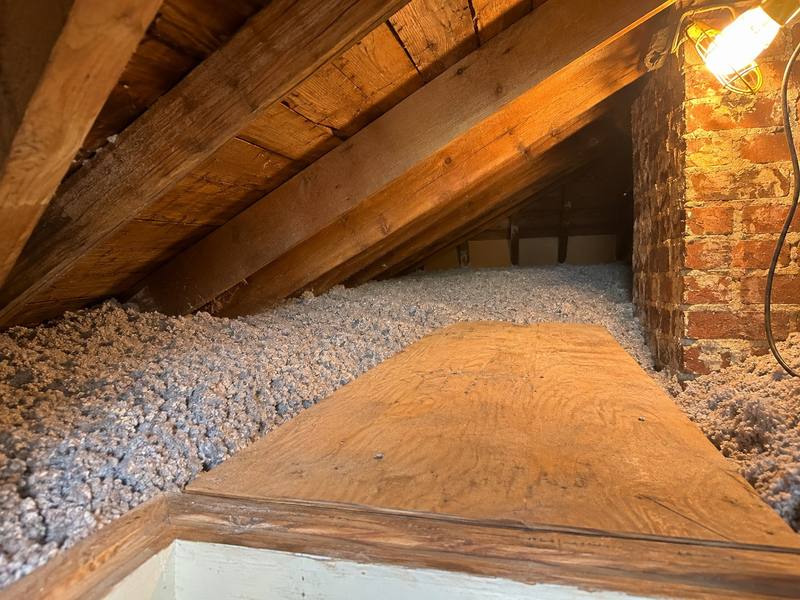
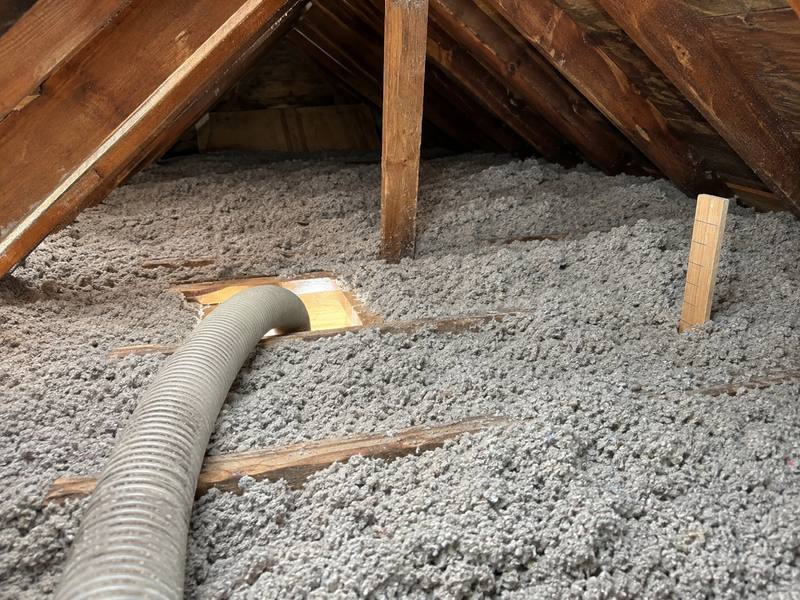
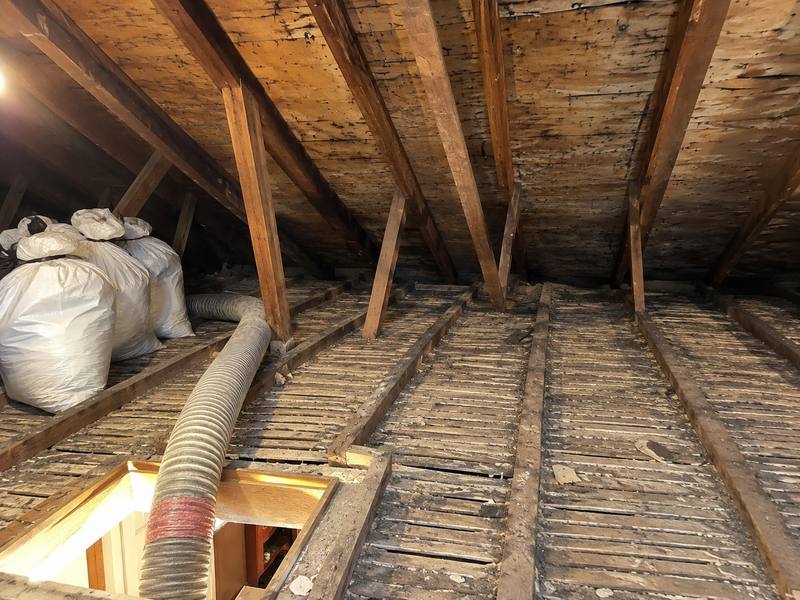
Spray foam from the basement to the roof
In an older brick house, spray foam makes the most sense where air leaks and cold meet the structure. Here's the house from the bottom up: what foam does in each part, and what we use when foam isn't the right call.
Rim joists and basement walls
In an old house the rim joist, the board capping the floor joists at the top of the basement wall, is often one long, leaky strip. Closed-cell foam sprayed into each joist bay seals the gaps and insulates in one pass, and it holds up against damp masonry. For the basement walls below, the other option is rigid foam board behind a framed wall and drywall, once the wall is dry. Our basement insulation page covers both.
Brick and balloon-framed walls
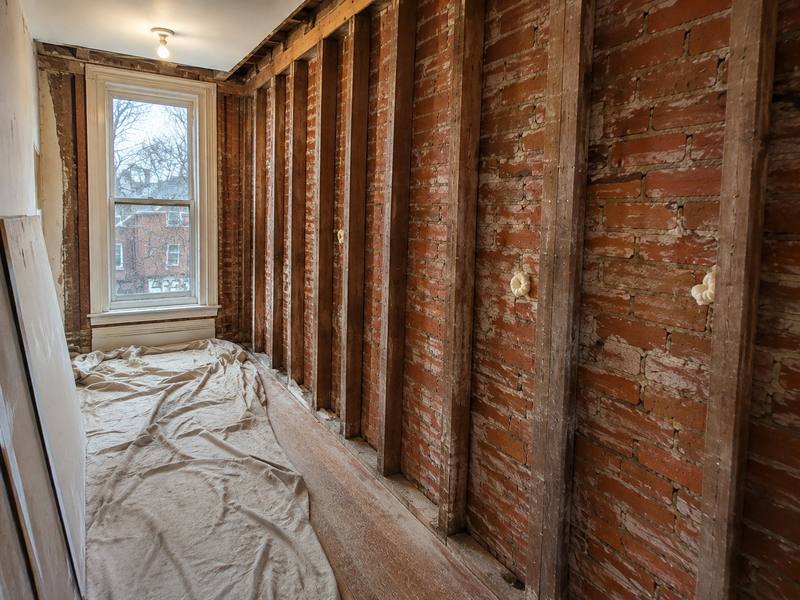
Double-brick walls have no stud cavity to fill, so they can only be insulated from the inside, and that brings up moisture questions we cover further down. Balloon framing is a different problem. The studs run from the foundation to the roof with no blocking between floors, so air rises inside the walls the way it rises up a chimney. If a frame wall is closed, we dense-pack it through small holes and patch them. Foam goes in where a wall is already open to the studs. Our wall insulation page explains both methods.
Knee walls and half-storey attics
Knee walls are the short walls under the roof slope in a top-floor room, and the cramped spaces behind them leak cold air into the bedrooms. Foam on the back of the knee wall, or on the underside of the roof deck behind it, closes those leaks in a space too tight for batts to fit properly. If you can reach the floor behind the knee wall, loose-fill over an air-sealed floor can do the job instead.
Sloped ceilings and flat-roof additions
A sloped ceiling, or the roof of a flat-roof addition, has no attic above it, just a shallow rafter cavity. SB-12, the Ontario Building Code's energy standard, sets R-31 as the minimum in Zone 1 for a new house's ceiling with no attic space above it. When an older roof has little in that cavity, closed-cell foam fits the most R-value into whatever depth the rafters allow. The other route is adding insulation on top during a reroof, and our roof and flat roof insulation page explains when each one fits.
Closed-cell and open-cell foam, side by side
Closed-cell spray foam is dense and rigid, and it resists vapour. That matters wherever foam meets cold brick, because closed-cell keeps warm, moist indoor air from reaching the cold surface and condensing in winter. We use it on rim joists, solid brick walls and sloped ceilings with shallow rafters.
Open-cell spray foam is soft and lets vapour through. It's fine in thicker layers where indoor winter humidity stays low, like the underside of a roof deck with deep rafters over a dry house. It seals the air leaks it covers, as any spray insulation does, but on its own it won't stop vapour.
- Closed-cell: dense and rigid, resists vapour, more R-value per unit of depth, goes against masonry and into shallow cavities
- Open-cell: soft and vapour-open, needs more depth for the same R-value, goes against wood where there's room and the indoor air stays dry
- In an old house: closed-cell anywhere foam touches brick or stone, open-cell only in deep wood-framed cavities
Where we don't use spray foam
On an open attic floor with room for depth, loose-fill insulation costs less than foam. We blow it over the ceiling once the leaks are sealed, and our attic insulation page goes through that job.
A closed frame wall can take dense-pack cellulose through small holes, and the plaster stays put. Foam would mean opening up the whole wall.
Foam won't fix a basement wall that lets in water. The water gets dealt with first, through grading, downspouts or drainage, and the wall gets insulated once it stays dry. We also never spray foam over insulation that ought to come out, so old insulation removal happens before anything new goes in.
Foam against solid brick: moisture comes first
Insulating the inside of an older load-bearing brick wall in a cold climate can cause durability problems in some cases, mostly freeze-thaw damage to the brick and rot in wood built into the wall. It comes down to drying. Once the inside is insulated, the brick runs colder and dries more slowly after rain.
So before we insulate, we find where the wall gets wet: corners under window sills, brick near grade, spots under leaking gutters or downspouts. Those get fixed first. Foam sprayed straight onto the brick then forms an airtight inner layer, with no gap where moist indoor air could reach the cold masonry. Our page on insulating the walls of an old brick house goes into more detail.
Questions worth putting to any installer who plans to foam a solid brick wall:
- Where does this wall get wet now, and what gets fixed before insulating?
- Are there wood lintels, joist ends or nailing strips built into the brick?
- Will the foam be closed-cell, applied straight to the brick with no gap?
- What happens at the window sills and openings where water collects?
- How will the foam be covered once it's in?
Semis, row houses and the shared wall
If your house shares a party wall with the house next door, that wall isn't an outside wall, and it doesn't need insulating like one. The heat loss happens at its edges.
Look where the party wall meets the attic, the roof and the rim joist. Air moves through those gaps from one house to the other and up into the roof space. A party wall is a fire separation, so a gap in it is a matter for a qualified contractor or the City; our crew points it out and insulates up to the wall on your side, usually as part of a bigger attic or basement job.
Fresh air in a tighter house
Foam cuts air leaks, and a house that leaks less also loses the accidental fresh air it used to get. Moisture from showers, cooking and drying laundry hangs around longer.
A tighter house needs bathroom and kitchen fans that vent outside rather than into the attic, plus a plan for moisture in the rooms that produce it. When the foam work will change how your house breathes, we point it out on the quote.
Does spray foam need to be covered?
Yes. Interior spray foam in a living space needs drywall over it, because the drywall is what gives the foam its fire protection. Foam left bare in a finished room means the job isn't done.
Your quote says which spots need covering and how. A few areas, like some rim joists in an unfinished basement, we discuss case by case, and we'll explain the options for each.
What a spray foam quote should spell out
Spray foam insulation contractors should put the details in writing so you can compare quotes line by line. Whoever you hire for spray foam insulation in Toronto, make sure the quote names these:
- Each area by name: rim joists, knee walls, sloped ceiling, flat-roof addition
- Open-cell or closed-cell for each area
- Thickness and the target R-value
- Prep and any old insulation removal, including spray foam removal where earlier foam failed
- How the foam gets covered afterwards
- Ventilation during the work, and when you can use the space again
What drives the price of foam work
The price moves with the total area, the type of foam, the thickness, how hard the spaces are to reach, and how much removal and prep has to happen first. A cramped knee wall takes more labour than an open basement. Our spray foam insulation cost page goes through each factor.
Rebates and permits for foam work
Home Renovation Savings offers rebates for insulation work. If you go the home energy assessment route, the program lists rebates for wall, foundation and exposed-floor insulation, plus air sealing. Attic insulation has its own rebate that doesn't need an assessment. Terms apply, so check the program before the work starts.
Adding or replacing insulation doesn't need a City of Toronto building permit, but the Zoning Bylaw still applies. If the same renovation builds an addition or moves a wall, that part does need a permit.
The Work
How an insulation job goes in a Toronto home
Every job goes in the same order. We look first, seal second and insulate last.
Inspection
We measure what's there now, look for damp, pest damage and air leaks, and check how the attic and walls are vented.
Air sealing and prep
We seal penetrations, top plates and hatches, fit baffles so the soffit vents stay open, and cover your floors and belongings.
Install and walk-through
The material goes in to the depth we agreed in writing. We take the debris with us and walk you through the finished work.
FAQ
Spray foam insulation questions from Toronto homeowners
Spray foam costs more per area covered than loose-fill or batts, so it only makes sense where its air seal matters. On rim joists, sloped ceilings and knee walls, one layer does two jobs. On an open attic floor, loose-fill usually gets you the same result for less.
Spray foam seals air leaks and insulates in the same layer, and it sticks to framing and brick in shapes batts can't fill. Closed-cell foam also resists vapour and packs a lot of R-value into a shallow cavity. That's why it works in tight spots like rim joists and sloped ceilings.
Yes. Spray foam inside a living space needs drywall over it, and that drywall is the foam's fire protection. A few spots, such as some rim joists in an unfinished basement, we discuss case by case. Your quote lists which areas get covered.
Foam comes out when it was mixed or applied badly, pulled away from the framing, or trapped moisture against wood or brick. It also comes out when a renovation means opening the wall or roof. Taking it out is slow, careful work, which is why the first install is worth getting right.
For an open attic floor with room for depth, blown-in loose-fill over an air-sealed ceiling is the best value. Where there's no room, like sloped ceilings and knee walls, closed-cell spray foam does better. It mostly comes down to how much space your attic gives you.
No. Adding or replacing insulation doesn't need a City of Toronto building permit, though the Zoning Bylaw still applies. If the same renovation adds an addition or moves a wall, that part of the work needs a permit.
No. A basement wall that lets water in gets fixed first and insulated after. Foam over a leaking wall just hides the problem. Once the wall stays dry, closed-cell foam or rigid board can go on.
Yes, when the old material is wet, damaged by animals, packed down or in the way of the foam. Clean, dry insulation in a spot we aren't foaming can often stay where it is. The quote spells out what comes out and why.

Service Areas
Toronto neighbourhoods we insulate
We work across the west end and midtown, from Parkdale and Brockton up to The Annex, Forest Hill and Humewood-Cedarvale.

Get a Quote
Get a spray foam insulation quote in Toronto
Tell us the address and which part of the house bothers you, whether that is a cold top floor, a drafty basement or a ceiling with no attic above it. Phone or use the form. We'll set up a time to look at the house, then give you a written quote.